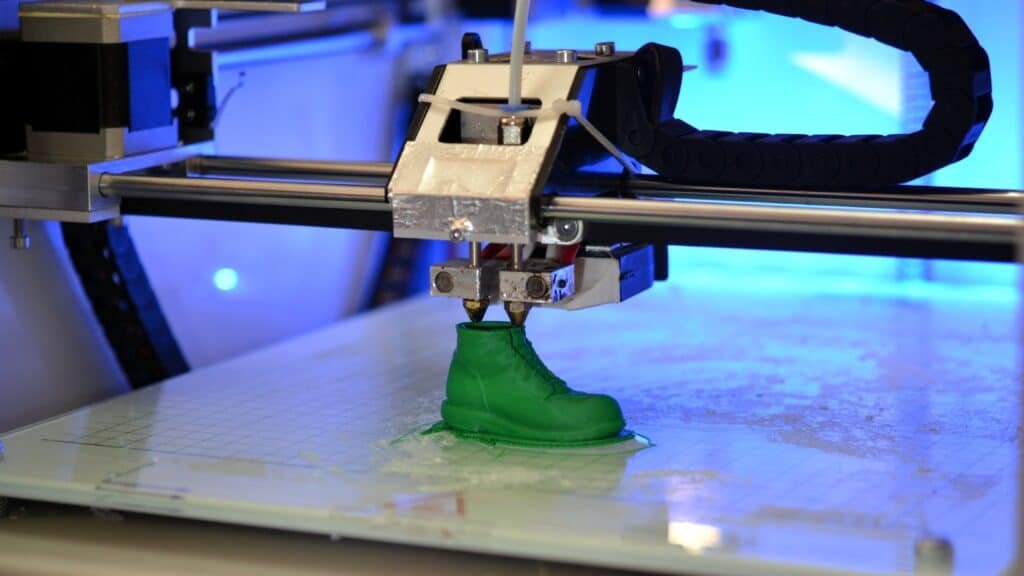
The rise of industrial 3D printing applications has transformed how businesses approach product development and manufacturing. Once limited to rapid prototyping, additive manufacturing now plays a vital role in full-scale production across multiple sectors. Companies leverage this technology to accelerate design cycles, reduce costs, and unlock new possibilities in customization and efficiency.
As industries adapt to changing market demands, understanding the full spectrum of additive manufacturing—from concept models to end-use parts—has become essential. This article explores the practical uses of 3D printing in industrial settings, highlighting its impact on prototyping, tooling, and production workflows.
For those interested in related print technologies, you can also learn about what is soft hand feel in garment printing and how it compares to advances in additive manufacturing.
Expanding the Role of Additive Manufacturing in Industry
Over the past decade, the adoption of 3D printing in industrial environments has grown rapidly. Manufacturers now use additive processes not only for early-stage prototypes but also for functional parts, tooling, and even direct production. This shift is driven by several factors:
- Speed: Rapid iteration and reduced lead times for design changes.
- Cost savings: Lower material waste and minimized tooling expenses.
- Design freedom: Ability to create complex geometries not possible with traditional methods.
- Customization: Efficient production of bespoke or low-volume parts.
These advantages have made additive manufacturing a strategic tool for industries ranging from aerospace and automotive to healthcare and consumer goods.
Prototyping: Accelerating Product Development
One of the earliest and most widespread uses of 3D printing in industry is rapid prototyping. Engineers and designers can quickly produce physical models of new products, enabling faster validation of form, fit, and function. This approach reduces the time and cost associated with traditional prototyping methods, such as CNC machining or injection molding.
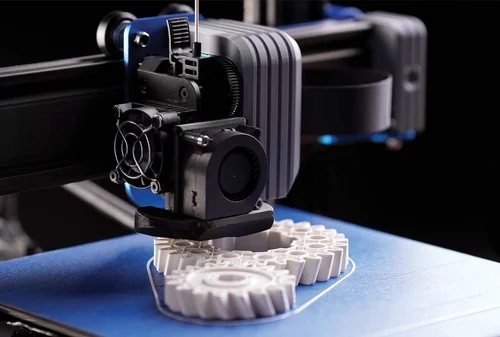
With technologies like FDM, SLA, and SLS, teams can test multiple design iterations in a matter of days. This flexibility is especially valuable for startups and R&D departments, where time-to-market is critical. The ability to hold and evaluate a prototype early in the process leads to better decision-making and fewer costly revisions later.
Tooling and Manufacturing Aids: Enhancing Production Efficiency
Beyond prototyping, industrial 3D printing applications are increasingly used to produce custom tooling, jigs, and fixtures. These manufacturing aids help streamline assembly lines, improve quality control, and reduce manual labor. Since additive manufacturing allows for on-demand production, companies can create tools tailored to specific tasks without waiting for external suppliers.
Examples of tooling produced with 3D printing include:
- Assembly fixtures for precise component placement
- Inspection gauges for quality assurance
- Custom end-of-arm tooling for robotics
- Ergonomic hand tools designed for operator comfort
The ability to rapidly iterate and replace tools as needed leads to improved uptime and adaptability on the factory floor.
End-Use Parts: Moving Toward Full-Scale Production
As materials and printer technologies advance, additive manufacturing is now capable of producing durable, functional end-use components. Industries such as aerospace, automotive, and healthcare are leading the way in adopting 3D printing for final parts. This transition is enabled by high-performance polymers, metals, and composites that meet stringent mechanical and regulatory requirements.

Additive manufacturing enables the production of lightweight structures, consolidated assemblies, and highly customized parts. For example, aerospace companies use 3D printing to create complex brackets and ductwork that reduce aircraft weight, while medical device manufacturers produce patient-specific implants and surgical guides.
Key Industries Leveraging Additive Manufacturing
The versatility of industrial 3D printing applications is evident across a variety of sectors. Here are some leading examples:
- Aerospace: Lightweight components, engine parts, and custom tooling.
- Automotive: Prototypes, production tools, and low-volume end-use parts.
- Healthcare: Custom prosthetics, dental devices, and surgical models.
- Consumer products: Short-run manufacturing, personalized goods, and design validation.
- Industrial equipment: Replacement parts, machine components, and maintenance tools.
Each industry benefits from the unique strengths of additive manufacturing, whether it’s reducing inventory, enabling mass customization, or supporting agile supply chains.
Materials and Technologies in Modern 3D Printing
The range of materials available for industrial 3D printing continues to expand. Today’s printers can process thermoplastics, photopolymers, metals, ceramics, and composites. The choice of material depends on the application’s mechanical, thermal, and chemical requirements.
Common 3D printing technologies used in industry include:
- Fused Deposition Modeling (FDM): Widely used for prototyping and tooling with engineering-grade plastics.
- Stereolithography (SLA): Produces high-detail parts with smooth surface finishes, ideal for medical and dental models.
- Selective Laser Sintering (SLS): Creates strong, functional parts from nylon and other polymers without support structures.
- Direct Metal Laser Sintering (DMLS) / Selective Laser Melting (SLM): Enables production of metal parts for aerospace, automotive, and medical applications.
For a deeper look at how these processes work, see this detailed explanation of 3D printing mechanisms and examples.
Challenges and Considerations in Industrial Adoption
While the benefits are significant, integrating additive manufacturing into established production environments comes with challenges. Companies must consider:
- Material qualification and certification
- Process repeatability and quality assurance
- Post-processing requirements (e.g., support removal, surface finishing)
- Cost analysis versus traditional manufacturing methods
- Intellectual property and digital security
Overcoming these hurdles requires investment in workforce training, process validation, and collaboration with technology providers.
Future Trends in Industrial Additive Manufacturing
The future of industrial 3D printing applications points toward greater integration with digital manufacturing systems, increased automation, and broader material choices. As machine speeds improve and costs decrease, additive manufacturing will become more accessible for small and medium-sized enterprises.
Emerging trends include:
- Hybrid manufacturing, combining additive and subtractive processes
- Distributed production and digital inventory models
- Mass customization for consumer and medical products
- Use of sustainable, recyclable, or bio-based materials
For fashion and textile businesses, innovations in digital production models—such as the benefits of micro-factory models for fashion printing—demonstrate how digital manufacturing is reshaping traditional industries.
Frequently Asked Questions
What are the main advantages of using 3D printing in industrial settings?
The primary advantages include rapid prototyping, reduced lead times, lower tooling costs, and the ability to create complex or customized parts. Additive manufacturing also supports on-demand production, which can help companies respond quickly to market changes.
Which industries benefit most from additive manufacturing?
Sectors such as aerospace, automotive, healthcare, and consumer products are leading adopters. Each industry leverages 3D printing for different reasons, such as lightweighting, customization, or supply chain agility.
Can 3D printing be used for mass production?
While traditionally used for prototyping and low-volume runs, advances in printer speed, material properties, and process automation are making mass production increasingly viable for select applications—especially where customization or complex geometries are required.
Conclusion
The evolution of industrial 3D printing applications has moved well beyond prototyping. Today, additive manufacturing is a powerful tool for producing functional parts, custom tooling, and even end-use products across diverse industries. As technology continues to advance, its role in modern manufacturing will only expand, offering new opportunities for innovation, efficiency, and competitive advantage.