Understanding how to calculate ink consumption for fabric runs is essential for textile manufacturers, print shops, and designers working with digital or screen printing. Accurate estimates help control costs, avoid production delays, and ensure consistent print quality. Whether you’re managing a small batch or a large-scale project, knowing your ink requirements prevents waste and supports efficient production planning.
In this guide, we’ll break down the key factors that influence ink usage, explain calculation methods, and share practical tips for optimizing consumption. If you’re also interested in achieving a premium finish, you might want to learn about what is soft hand feel in garment printing for additional insights into fabric printing techniques.

Why Accurate Ink Estimation Matters in Fabric Printing
Ink is one of the most significant variable costs in textile printing. Overestimating leads to unnecessary purchases and potential waste, while underestimating can disrupt production schedules. For both digital and traditional methods, precise ink planning ensures:
- Consistent color results across the entire run
- Efficient inventory management
- Reduced material waste and environmental impact
- Accurate job costing and pricing
With the rise of digital textile printing, understanding ink usage has become even more crucial. For a deeper dive into the technology, see this comprehensive overview of digital textile printing.
Key Factors Affecting Ink Usage in Fabric Runs
Before you can estimate ink requirements, it’s important to recognize the variables that impact consumption. These include:
- Fabric type and composition: Natural fibers like cotton absorb more ink than synthetics such as polyester.
- Print method: Digital printing, screen printing, and sublimation each have unique ink laydown characteristics.
- Design coverage: Full-bleed, solid, or highly saturated designs use more ink than sparse or light patterns.
- Color palette: Designs with many colors or heavy use of dark shades (especially black) increase ink demand.
- Printer settings: Resolution (DPI), ink limits, and color management profiles all influence output.
- Pre-treatment and finishing: Some fabrics require pre-treatment, which can affect ink absorption and yield.
Step-by-Step Guide: Calculating Ink Consumption for Fabric Runs
To estimate ink needs for a production run, follow these steps:
-
Determine the total print area
Calculate the total square meters (or square feet) to be printed. Multiply the length of fabric by the width, then by the number of pieces or meters in the run. -
Assess design coverage
Estimate the percentage of the area covered by ink. For example, a design that covers half the fabric is 50% coverage. -
Identify ink yield per square meter
Refer to your printer or ink supplier’s technical data sheets. Yields are often given as milliliters (ml) per square meter at a specified coverage (usually 100%). -
Calculate total ink required
Use the formula:
Total Ink (ml) = Print Area (m²) × Coverage (%) × Ink Yield (ml/m²) -
Add a safety margin
Include an extra 5–10% to account for setup, test prints, and potential reprints.
Let’s look at a practical example:
- Fabric to print: 200 meters, 1.5 meters wide
- Total area: 200 × 1.5 = 300 m²
- Design covers 60% of the area
- Ink yield: 10 ml/m² at 100% coverage (from supplier data)
- Estimated ink: 300 × 0.6 × 10 = 1,800 ml
- With 10% margin: 1,800 × 1.1 = 1,980 ml
So, you would need approximately 2 liters of ink for this production run.
Digital vs. Screen Printing: Differences in Ink Consumption
The method you use will affect how you calculate ink needs:
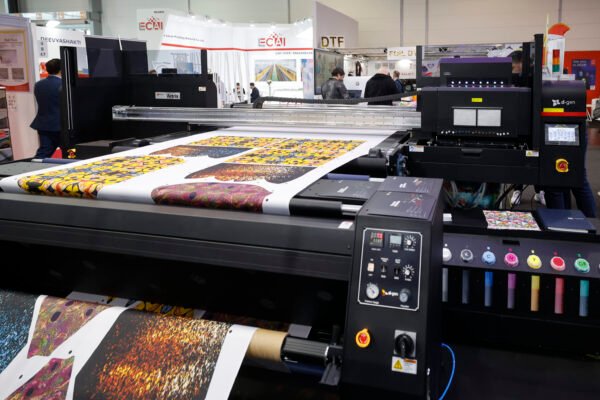
- Digital printing: Ink usage is highly dependent on image resolution, color management, and printer efficiency. Many RIP (Raster Image Processor) software tools can simulate ink consumption based on the print file and settings.
- Screen printing: Ink is applied through a mesh screen, so coverage is typically higher per pass. Calculations are based on mesh count, squeegee pressure, and design complexity.
For both methods, running a small test print and weighing ink cartridges or containers before and after can provide a real-world consumption benchmark.

Tips for Reducing Ink Usage and Costs
Optimizing ink consumption not only saves money but also supports sustainability. Here are some practical strategies:
- Optimize artwork: Use lighter colors, reduce solid fills, and minimize unnecessary gradients or overlays.
- Adjust printer settings: Lowering resolution or ink limits (where possible) can reduce consumption without sacrificing quality.
- Choose the right fabric: Some materials require less ink to achieve vibrant results.
- Maintain equipment: Well-calibrated printers and clean printheads ensure efficient ink laydown.
- Batch production: Printing similar designs together can reduce setup waste and ink purges.
Common Mistakes to Avoid When Estimating Ink for Fabric Runs
Even experienced professionals can misjudge ink needs. Watch out for these pitfalls:
- Ignoring the impact of fabric pre-treatment or finishing processes
- Using generic ink yield data instead of supplier-specific figures
- Forgetting to include test prints and setup sheets in calculations
- Not accounting for design changes or last-minute adjustments
- Neglecting to add a safety margin for unexpected issues
Integrating Ink Estimation into Your Production Workflow
Incorporating ink calculations into your standard operating procedures streamlines production and improves profitability. Many modern print management systems and RIP software offer built-in ink estimation tools. For those using micro-factory models or on-demand production, accurate ink planning is especially critical for lean operations. To learn more about these innovative workflows, explore the benefits of micro-factory models for fashion printing.
FAQ: Ink Consumption and Fabric Printing
What is the average ink usage per square meter for digital fabric printing?
Ink consumption varies by printer, ink type, and design. A common range is 8–15 ml per square meter at 100% coverage. Always check your equipment’s technical data for precise figures.
How can I measure actual ink usage for a specific job?
The most accurate method is to weigh ink cartridges or bottles before and after a test print of your design. Many RIP software solutions also provide ink usage estimates based on your print file and settings.
Does fabric color affect ink consumption?
Yes, printing on dark or colored fabrics often requires more ink, especially when using white underbases or achieving vibrant color results. Adjust your calculations accordingly when working with non-white substrates.