The rise of 3D printing in manufacturing has transformed how products are designed, prototyped, and produced across a wide range of industries. This technology, also known as additive manufacturing, enables the creation of complex geometries and customized parts with remarkable speed and efficiency. As a result, businesses are rethinking traditional production methods and embracing new opportunities for innovation and cost savings.
In this article, we’ll explore the core principles behind additive manufacturing, examine its most impactful industrial uses, and discuss the benefits and challenges companies face when adopting this technology. Whether you’re new to the concept or looking to deepen your understanding, you’ll find practical insights and real-world examples that highlight why so many sectors are investing in these advanced fabrication techniques.

For those interested in how modern fabrication compares to other print technologies, you might also want to read about what is soft hand feel in garment printing and how it relates to material properties and production methods.
Understanding Additive Manufacturing in Industry
Additive manufacturing refers to the process of building objects layer by layer from digital models, typically using materials such as plastics, metals, or composites. Unlike subtractive methods, which remove material from a solid block, this approach adds material only where needed, minimizing waste and enabling intricate designs.
The most common types of 3D printing technologies used in industrial settings include:
- Fused Deposition Modeling (FDM): Melts and extrudes thermoplastic filament to form parts.
- Stereolithography (SLA): Uses a laser to cure liquid resin into hardened plastic.
- Select Laser Sintering (SLS): Fuses powdered materials with a laser to create durable components.
- Direct Metal Laser Sintering (DMLS): Builds metal parts directly from powder, ideal for aerospace and automotive applications.
Each technique offers unique advantages depending on the desired material properties, accuracy, and production speed.
Key Industrial Applications of 3D Printing
The adoption of 3D printing in manufacturing is reshaping how companies approach product development and production. Here are some of the most significant industrial uses:
Rapid Prototyping and Product Development
One of the earliest and most widespread uses of additive manufacturing is rapid prototyping. Engineers and designers can quickly turn digital concepts into physical models, allowing for faster iteration and testing. This reduces the time and cost associated with traditional prototyping methods, enabling companies to bring products to market more efficiently.
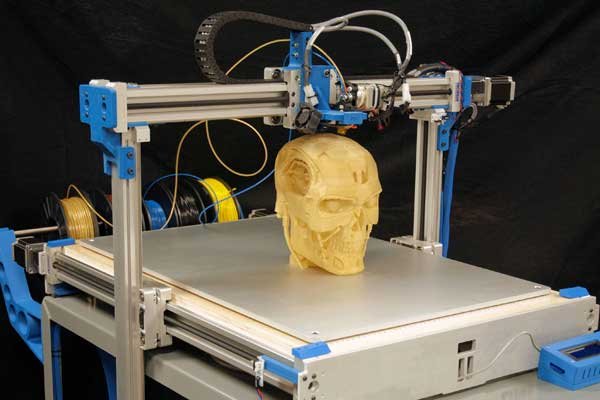
Rapid prototyping is especially valuable in industries such as automotive, aerospace, and consumer electronics, where design changes are frequent and speed is critical. By using 3D printers, teams can evaluate form, fit, and function before committing to expensive tooling.
Tooling, Jigs, and Fixtures
Manufacturing operations often require custom tools, jigs, and fixtures to streamline assembly and quality control. Additive manufacturing allows for the quick production of these aids, tailored to specific tasks or production lines. This flexibility reduces downtime and enhances productivity.
For example, a factory might use 3D-printed alignment jigs to ensure precise placement of components, or create custom fixtures that hold parts securely during machining or inspection. These solutions can be produced on-demand, adjusted as processes evolve, and replaced at minimal cost.
End-Use Parts and Customization
As technology advances, more manufacturers are producing end-use parts directly with additive methods. This is particularly useful for low-volume production, spare parts, and highly customized products. Industries such as healthcare, aerospace, and fashion have embraced this approach to deliver tailored solutions and reduce inventory.
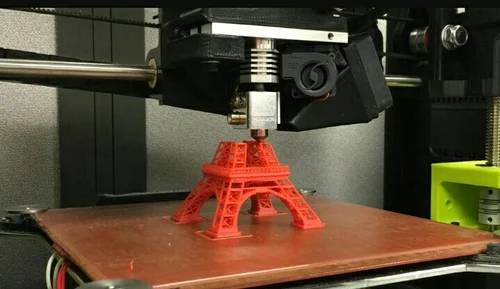
In the medical field, for example, 3D-printed implants and prosthetics can be customized to fit individual patients. In aerospace, lightweight and complex components are produced to exact specifications, improving performance and reducing fuel consumption.
Benefits and Challenges of Adopting Additive Manufacturing
The shift toward 3D printing in manufacturing brings several notable advantages:
- Design Freedom: Create complex shapes and internal structures not possible with traditional methods.
- Reduced Waste: Additive processes use only the material required, minimizing scrap.
- Faster Time-to-Market: Rapid prototyping and on-demand production speed up development cycles.
- Customization: Easily produce one-off or low-volume parts tailored to specific needs.
- Lower Inventory Costs: Manufacture parts as needed, reducing the need for large stockpiles.
However, there are also challenges to consider:
- Material Limitations: Not all materials are suitable for every 3D printing process, and some may lack the required strength or durability.
- Surface Finish: Parts may require post-processing to achieve desired smoothness or appearance.
- Production Speed: While fast for prototypes and small batches, additive manufacturing can be slower than mass production for high volumes.
- Initial Investment: Industrial-grade printers and skilled operators can require significant upfront costs.
Companies must weigh these factors when deciding how to integrate additive manufacturing into their operations.
Industries Leading the Way in Additive Manufacturing
Several sectors have emerged as early adopters and innovators in the use of 3D printing for industrial purposes:
- Aerospace: Lightweight, complex parts for aircraft and spacecraft, including engine components and structural elements.
- Automotive: Prototyping, tooling, and even end-use parts for performance vehicles and custom builds.
- Healthcare: Patient-specific implants, dental devices, prosthetics, and surgical guides.
- Consumer Products: Custom eyewear, footwear, and electronics enclosures.
- Fashion and Textiles: Innovative designs and rapid iteration for apparel and accessories. For more on how modern production models are evolving, see the benefits of micro-factory models for fashion printing.
As technology matures, more industries are expected to embrace additive manufacturing for both prototyping and production.
Getting Started with 3D Printing for Industrial Use
For businesses considering the adoption of additive manufacturing, it’s important to evaluate your specific needs, available materials, and the types of parts you wish to produce. Many companies begin with rapid prototyping before expanding into tooling or end-use production.
There are numerous resources available to help you understand the basics and select the right equipment. For a comprehensive overview, consult this detailed guide to 3D printing processes and materials.
As you explore options, consider factors such as build volume, material compatibility, resolution, and support for post-processing. Partnering with experienced service providers or investing in in-house expertise can help ensure a smooth transition.
Frequently Asked Questions
What materials can be used in industrial 3D printing?
Industrial 3D printers can process a wide range of materials, including thermoplastics (like ABS, PLA, and nylon), photopolymers, metals (such as titanium, aluminum, and stainless steel), and composites. The choice of material depends on the desired mechanical properties, application, and printing technology.
How does additive manufacturing compare to traditional manufacturing?
Additive manufacturing builds objects layer by layer, allowing for greater design flexibility and less material waste. Traditional manufacturing often involves subtractive processes (like machining) or molding, which can be more efficient for high-volume production but less adaptable for custom or complex parts.
Is 3D printing suitable for mass production?
While additive manufacturing excels at prototyping, customization, and low-volume production, it is generally less cost-effective for large-scale manufacturing compared to injection molding or casting. However, advances in printer speed and automation are gradually making higher-volume production more feasible.
As the landscape of 3D printing in manufacturing continues to evolve, staying informed about new developments and best practices will help organizations remain competitive and innovative in their respective fields.